
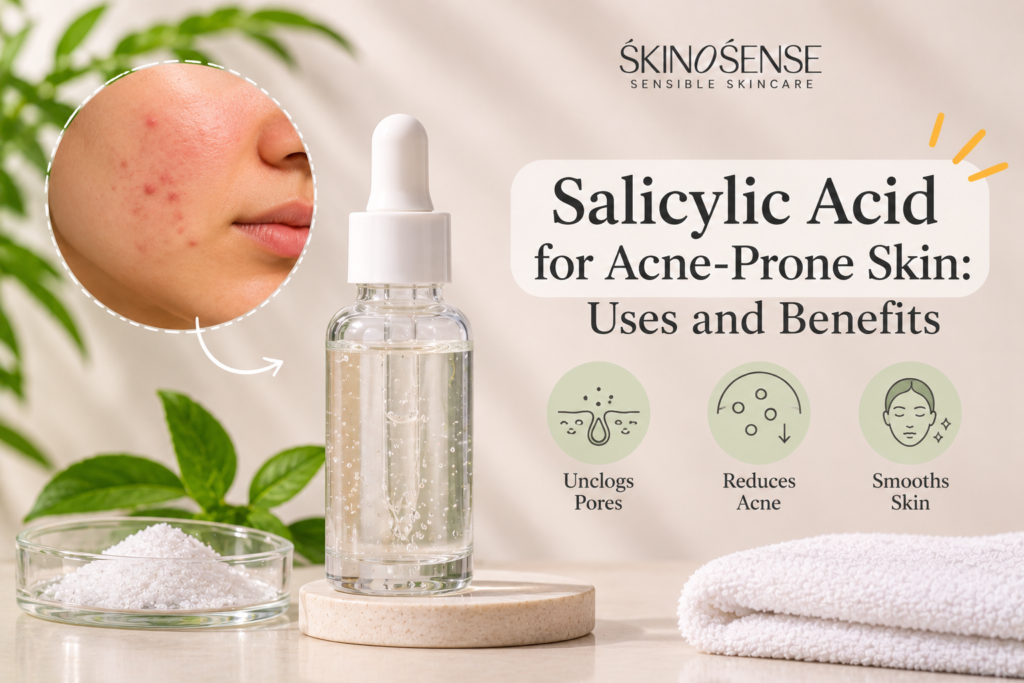
Have you seen salicylic acid on a skin care label? Many products list it. It is one of the most talked-about skin care words today. However, many people do not know what it does. So what is salicylic acid for acne-prone skin, and how is it used? In this guide, you will learn the basics in simple words. Also, you will see how to use it safely. Let us get started!
What Is Salicylic Acid?
Salicylic acid is a skin care ingredient. It belongs to a group called beta hydroxy acids, or BHAs. The name sounds hard, but the idea is simple. It is an ingredient that works on the skin’s surface and inside the pores.
Salicylic acid is oil-friendly. Because of this, it can enter pores that hold oil. That is why people with oily or acne-prone skin often hear about it. It shows up in cleansers, toners, serums and spot products.
How Does Salicylic Acid Work?
Think of your pores like tiny tubes. Oil, dirt and dead skin can fill them up. As a result, small bumps and blackheads may form.
Salicylic acid helps loosen this mix. It also helps the skin shed dead cells from the surface. Therefore, pores may look clearer and feel smoother over time. However, it is not a quick fix. Skin changes slowly, so you need patience.
Benefits of Salicylic Acid for Acne-Prone Skin
Many people use this ingredient for good reasons. Here are the main benefits.
First, it may help clear clogged pores. Second, it can help smooth rough skin. Third, it may help reduce extra oil on the surface. In addition, it can make blackheads and whiteheads less noticeable for some people.
Still, results differ from person to person. Every skin type is different. So do not expect the same result as a friend. Also, remember that this ingredient does not replace a doctor’s advice.
How to Use Salicylic Acid Safely
Start slowly. Your skin needs time to get used to a new ingredient. Follow these easy steps.
First, do a patch test. Put a small amount on your arm or behind your ear. Then wait a day to see if your skin reacts. Next, begin with a low amount. Use it just two or three times a week. After that, you can add more days if your skin feels fine.
Always use it on clean skin. Apply a thin layer and avoid your eyes and lips. Then follow with a light moisturiser. Finally, use sunscreen in the morning, because this ingredient can make skin more sensitive to the sun.
Where Does Salicylic Acid Fit in Your Routine?
You can find salicylic acid in many product types. A cleanser touches your skin for a short time, so it is often a gentle way to begin. A toner or a serum stays on longer, so it may feel stronger. A spot product is only for small areas.
Pick just one product with this ingredient at first. Using many at the same time can be too much for your skin. Also, keep the rest of your routine simple. A gentle cleanser, a light moisturiser and sunscreen are enough.
If your skin gets pimples often, you may like our [Acne Sense Cleanser] . Always check the label for the ingredient list, and use the product as directed.
Precautions You Should Know
Salicylic acid is common, but it is not right for everyone. Keep these points in mind.
First, it can cause dryness, peeling, redness or stinging. If this happens, use it less often or stop. Second, do not use many strong products together. For example, avoid mixing it with other strong exfoliants. Third, always wear sunscreen, because your skin may burn more easily.
Also, talk to a doctor first if you are pregnant or breastfeeding. The same goes for anyone with an allergy to aspirin. If your skin is very sensitive, ask a dermatologist before you start.
Common Mistakes to Avoid
Even a good ingredient can cause trouble when used the wrong way. Here are the most common mistakes.
First, many people use too much, too soon. This can leave skin dry and sore. Second, some people scrub hard while using it. Hard scrubbing can hurt your skin. Third, some people skip moisturiser because their skin feels oily. However, skin still needs water.
Also, never pick or pop pimples. Picking can leave marks. So be gentle, and give your skin time to adjust.
When to See a Dermatologist
A simple routine helps many people. However, some skin needs extra care. A dermatologist is a doctor who knows about skin. See one if your pimples are painful, deep or leave scars. Also, go if your skin does not improve after several weeks.
Moreover, stop using any product that burns or makes your skin very red. Then ask a doctor for advice. Remember that every skin is different. Therefore, a doctor can guide you in a way that fits your skin best.
Frequently Asked Questions (FAQs)
What is salicylic acid used for?
Salicylic acid is used in skin care to help clear clogged pores and smooth the skin. People with oily or acne-prone skin often use it. Also, it appears in many cleansers, toners and serums.
How often should I use salicylic acid?
Start with two or three times a week. Then add more days if your skin feels fine. However, stop if you notice burning or peeling.
Can I use salicylic acid every day?
Some people can, but many should not begin that way. Daily use may dry out your skin. Therefore, build up slowly and watch how your skin reacts.
Do I need sunscreen with salicylic acid?
Yes, you do. This ingredient can make skin more sensitive to the sun. Because of this, apply sunscreen every morning.
Is salicylic acid safe for sensitive skin?
It may feel strong on sensitive skin. So do a patch test first and start with a low amount. If you are unsure, ask a dermatologist.
Final Thoughts
Salicylic acid for acne-prone skin can be a helpful part of a gentle routine. It works on clogged pores and rough skin. However, it needs care. Patch test first, start slowly and use sunscreen. Moreover, keep your routine simple and stay patient. If you feel worried, talk to a dermatologist. So take small steps, and care for your skin with kindness!