
Have you heard of saffron in skin care? Many people know it as a golden spice. Cooks use it in food, and some brands also put it in skin care products. However, many people wonder if it really helps the skin. So what are the real saffron benefits for skin? In this guide, you will learn the facts in simple words. Also, you will see what science says and what it does not say. Let us get started!
What Is Saffron?
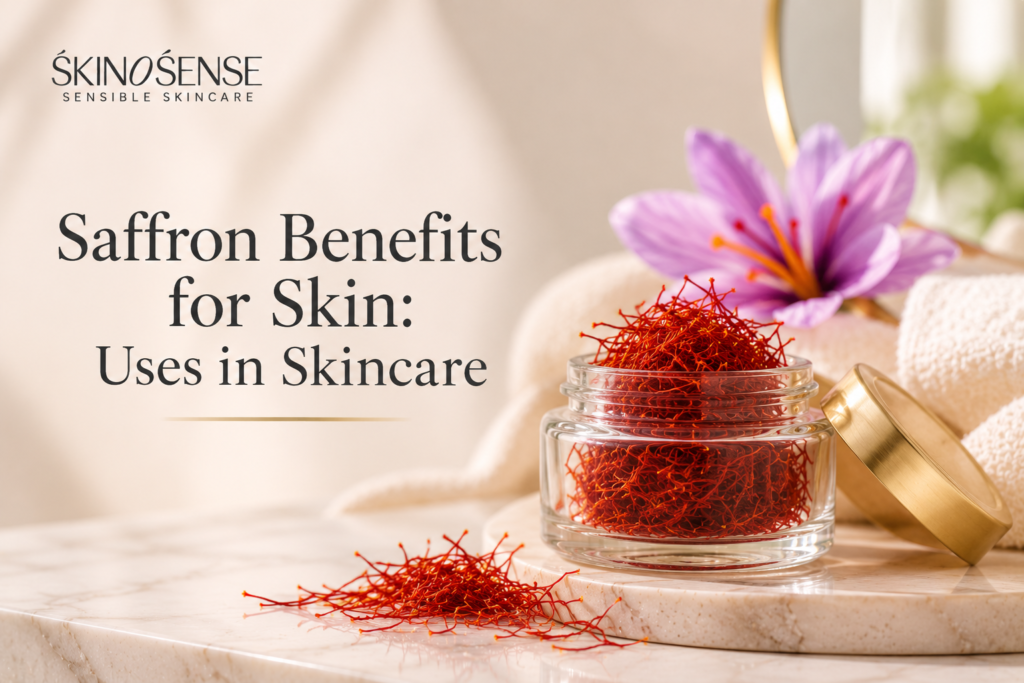
Saffron is a spice. It comes from a purple flower called the crocus. Each flower has only a few thin red threads inside. People pick these threads by hand. Because of this, saffron is rare and costly.
In India, people call saffron kesar. People have used it in food and old home care for many years. Today, makers also add saffron extract to some skin care products. It gives a warm golden colour and a soft scent.
Why Do Brands Use Saffron in Skincare?
Saffron has natural plant compounds. Two well-known ones are crocin and safranal. These compounds give saffron its colour and smell. In lab studies, they show antioxidant action. Antioxidants help protect cells from daily stress, such as sun and pollution.
For this reason, brands like saffron in skin care formulas. It sounds special, and it has a long history. However, a nice story does not prove a result. So it is important to look at what research really shows.
Saffron Benefits for Skin: What Research Shows
Here is the honest picture. Some small studies look at saffron and skin. Some lab tests also look at its antioxidant action. These results are interesting. However, most studies are small, and many do not test real skin over a long time.
Because of this, experts say we need more research. Saffron may support a healthy-looking complexion as part of a good routine. But no strong proof shows that it changes your skin tone. Likewise, nothing shows that it treats any skin problem. So be careful with big promises.
What Saffron Cannot Do
Many posts online make bold claims. Some say saffron can make your skin fair. Others say it can remove dark spots or scars. However, there is no strong proof for these claims.
Your body sets your natural skin colour. No spice can change it. Also, dark spots usually need sun care and patience. Therefore, treat saffron as a gentle extra, not a magic fix. If a product promises a fast change, be careful.
How to Use Saffron in Your Routine
The easiest way is to use a product made for skin. Makers test these products for safety. They also have the right amount of saffron. Look at the ingredient list on the label. Then pick a product that suits your skin type.
Saffron-based products can fit into your routine in simple ways. You can use a cleanser to start your day. After that, a toner can help your skin feel fresh. Finally, add a moisturiser. For example, you may like our [Radiance Cleanser ]and our [Skin Reset Toner]
Should You Use Raw Saffron on Your Face?
Many home tips say to soak saffron threads in milk or water and apply them. However, this is not the safest idea. Raw saffron can stain your skin. It can also cause redness or itching in some people. Also, nobody tests home mixes the way makers test store products.
So a ready-made product is a better choice. If you still want to try something at home, do a patch test first. Put a small amount on your arm. Then wait a day to see if your skin reacts.
Simple Tips for Healthy-Looking Skin
Saffron is only one small part of skin care. Good basics matter much more. Follow these easy steps.
First, cleanse your face twice a day with a gentle cleanser. Next, add a toner if you like it. Then use a light moisturiser. In the morning, finish with sunscreen, because sun is the biggest cause of dull skin and dark spots. In addition, drink water and sleep well.
Also, give new products time. Skin changes slowly. Most people need several weeks to see a difference.
Precautions to Keep in Mind
Most people can use saffron products safely. Still, every skin is different. Keep these points in mind.
First, always patch test a new product. Second, stop using it if your skin burns, itches or turns red. Third, add only one new product at a time. If you have an allergy to saffron or sensitive skin, ask a dermatologist before you start.
A dermatologist is a doctor who knows about skin. See one if you have dark spots, painful pimples or any skin worry. They can guide you in a way that fits your skin best.
Frequently Asked Questions (FAQs)
What are the benefits of saffron for skin?
Saffron has antioxidant compounds. Because of this, some brands use it in skin care products for a healthy-looking glow. However, strong proof is still limited, so expect small, gentle effects.
Does saffron make skin fair?
No, there is no proof of this. Saffron does not change your natural skin colour. So be careful with products that promise it.
Can I apply saffron directly on my face?
It is better to use a ready-made product. Raw saffron can stain or irritate the skin. If you try it, do a patch test first.
Is saffron good for oily or acne-prone skin?
Saffron is not a treatment for acne. However, some light products with saffron may suit many skin types. Therefore, pick a gentle product and patch test it first.
How long does saffron take to show results on skin?
Skin changes slowly. Many people notice a difference only after several weeks of steady care. Also, results differ for each person.
Final Thoughts
The saffron benefits for skin are gentle, not magic. Saffron is a lovely ingredient with a rich history. It has antioxidant compounds, and it can be a nice part of a routine. However, it will not work wonders overnight. Moreover, strong proof is still limited. So choose a gentle product, patch test it and be patient. With good basics and sunscreen, your skin will thank you!