
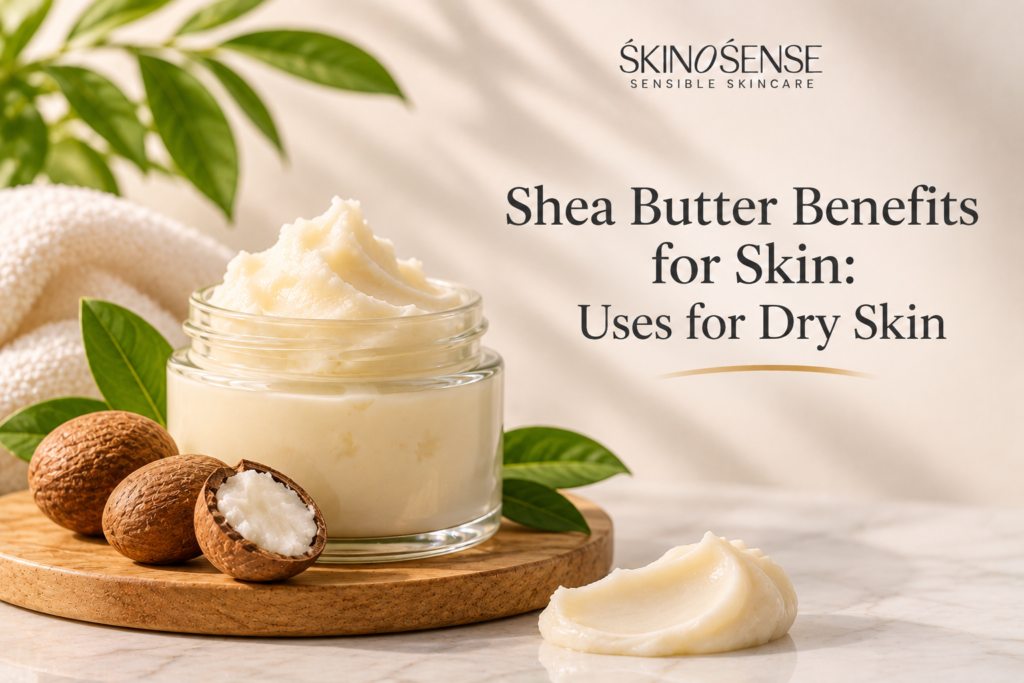
Does your skin feel tight and rough? Do your hands crack in cold weather? Many people deal with dry skin. Shea butter is a soft, creamy ingredient that people have used for a long time. So what are the real shea butter benefits for skin? In this guide, you will learn the facts in simple words. Also, you will see how to use it the right way. Let us get started!
What Is Shea Butter?
Shea butter comes from the nuts of the shea tree. This tree grows in parts of Africa. People pick the nuts, crush them and make a thick butter. The butter looks creamy, and it feels soft on the skin.
For many years, people have used shea butter to care for their skin. Today, many body lotions, lip balms and soaps contain it. Makers like it because it feels rich and smooth.
What Is Inside Shea Butter?
Shea butter has natural fats. These fats are also called fatty acids. They help soften the skin. It also has small amounts of vitamins, such as vitamin E.
Think of these fats like a soft blanket. They sit on top of your skin. As a result, they help hold in the water that is already there. That is why shea butter feels so good on dry skin.
Shea Butter Benefits for Skin
Here are the main reasons people use it.
First, it softens dry skin. Second, it helps keep the water in your skin, so your skin feels less tight. Third, it makes rough spots feel smoother, such as elbows, knees and heels. In addition, it feels rich and comforting, especially in cold weather.
Still, results differ from person to person. Shea butter helps your skin feel soft. However, it does not cure skin problems. So treat it as a helpful part of your routine, not a magic fix.
Who Should Use Shea Butter?
People with dry skin often love it. It can help dry hands, dry lips and rough feet. Many people also use it in winter, when the air is dry and cold.
However, it may feel heavy on oily skin. If your skin gets pimples easily, be careful with rich creams on your face. In that case, try it on your body instead. If you are unsure, ask a dermatologist.
How to Use Shea Butter
Using it is easy. Follow these simple steps.
First, wash your skin gently. Next, pat it dry, but leave it a little damp. Then take a small amount of product. After that, rub it between your hands to warm it. Finally, smooth it over your skin.
A little goes a long way. Use more on very dry spots, such as heels and elbows. You can use it once or twice a day. Many people like it after a bath, because the skin is still damp.
Shea Butter for Dry Hands and Lips
Hands and lips get dry the fastest. They face wind, water and soap all day. Also, the skin on your lips is very thin.
A good hand lotion can make your hands feel soft again. For example, you may like our [Hand Silk Feel Lotion ]. For your lips, you may try our [Cocoa Vanilla Lip Balm ]. Please check each label and ingredient list first. Always use each product as directed.
Shea Butter in Soaps
Some soaps also use shea butter. They can feel gentler than plain soaps. This can help if your skin feels dry after washing.
Still, soap only touches your skin for a short time. So it cannot replace a good moisturiser. After you wash, pat your skin dry and add a moisturiser. For help, see our [Skinosense soaps], and check the ingredient list first.
Common Mistakes to Avoid
Even a gentle ingredient can fail when you use it the wrong way. Here are the most common mistakes.
First, many people use too much on their face. This can feel greasy and may clog pores. Second, some people skip moisturiser during the day. However, dry skin needs care all day. Third, some people use very hot water. Hot water dries the skin and washes away natural oils.
Also, do not forget sunscreen on your face in the morning. Moisture is helpful, but sun care is just as important. So use both.
Precautions to Keep in Mind
Shea butter is safe for most people. Still, every skin is different. Keep these points in mind.
First, always patch test a new product. Put a small amount on your arm and wait a day. Second, stop using it if your skin itches, burns or turns red. Third, shea comes from a tree nut. So talk to a doctor first if you have a nut allergy.
See a dermatologist if your skin is very red, cracked or sore. Also, go if dryness does not improve after a few weeks. A dermatologist is a doctor who knows about skin. They can guide you in a way that fits your skin best.
Frequently Asked Questions (FAQs)
What is shea butter good for?
Shea butter helps soften dry skin. It also helps hold water in your skin. Many people use it on hands, lips, elbows and heels.
Can I use shea butter on my face?
Some people can. However, it can feel heavy, especially on oily skin. So try a small amount first. If your skin gets pimples, use it on your body instead.
Is shea butter good for dry skin?
Yes, it often is. It feels rich and soft on dry skin. Also, it works well in cold, dry weather.
Can I use shea butter every day?
Many people do. Use a small amount once or twice a day. However, stop if you notice itching or redness.
Is shea butter safe if I have a nut allergy?
Shea comes from a tree nut. So ask a doctor first. Also, always patch test a new product.
Final Thoughts
The shea butter benefits for skin are simple and gentle. It softens dry skin and helps keep the water in. However, it is not magic. Moreover, you still need sunscreen and good habits. So start with a small amount, patch test first and be patient. With steady care, your skin will thank you!